
The Woman Behind the Wobble: How Teódula Kalaw Africa Changed Food History
Who Was Teódula Kalaw Africa and Why Does She Matter?
Picture the Philippines in 1949. Coconut palms stretch endlessly across the islands, and coconut water, poured off by the barrelful during copra production, is treated as little more than waste. Then comes Teódula Kalaw Africa, a Filipino food technologist with a scientific mind and a refusal to accept that anything born from the coconut tree could be worthless. She is not a household name in the United States, but she absolutely should be. Her work changed the way the world eats, one bouncy cube at a time.
The 1949 Breakthrough: Turning Coconut Waste Into Something Extraordinary
In 1949, while working at the Bureau of Plant Industry in the Philippines, Africa discovered that fermenting coconut water with the bacterium Komagataeibacter xylinus produced something remarkable. A thick, translucent, rubbery gel formed at the surface of the liquid. It was chewy. It was satisfying. It was unlike anything anyone had tasted before. She pressed those first wobbly sheets between her fingers and recognized immediately that she was holding something extraordinary. That gel became nata de coco, and the rest is delicious history.
Why This Discovery Was Ahead of Its Time
Africa’s discovery was revolutionary not just because of the ingredient itself, but because of what it represented. She turned agricultural byproduct into a culinary treasure. She proved that Filipino food science belonged on the world stage. And she did it decades before “upcycling” became a trendy food concept. The world was not ready for her brilliance in 1949, but it caught up eventually.
From Coconut Water to Coconut Jelly Cubes: The Science of Fermentation Made Simple
What Actually Happens During Nata de Coco Fermentation?
Fermentation sounds complicated, but the process behind coconut jelly cubes is beautifully straightforward. Coconut water is inoculated with specific bacteria, which consume the natural sugars and, in return, produce a dense network of cellulose fibers. Those fibers build up into a thick, firm gel layer over the course of about two weeks. The result is a sheet of pure cellulose that is then cut, washed, and sweetened into the soft, springy cubes you know and love today.
Why the Texture of Coco Jelly Is Unlike Anything Else
This is where things get genuinely exciting. The texture of coco jelly is not like gelatin, which melts on your tongue. It is not like a gummy candy, which sticks to your teeth. Coconut gel cubes have a firm, satisfying bounce that resists and then yields in the most pleasing way. Food scientists describe it as a high water-holding cellulose matrix, but you will probably just describe it as incredibly fun to chew. That texture is entirely natural, entirely unique, and entirely the result of bacterial genius at work.
How Coconut Gel Cubes Went From a Lab Experiment to a Global Pantry Staple
By the 1970s and 1980s, nata de coco had moved out of the laboratory and into Filipino kitchens and markets. By the 1990s, it had exploded across Asia, becoming a beloved topping in desserts, drinks, and sweet soups from Manila to Tokyo. Today, you can find nata jelly in bubble tea shops, Asian grocery aisles, and online carts across the United States. Africa planted a seed in 1949, and it has been growing ever since.
From Filipino Kitchens to Global Bubble Tea Shops: The Cultural Journey of Nata Jelly
How Nata de Coco Became a Staple Across Asia
The journey of coconut jelly across Asia is a story of pure culinary magnetism. Filipino migrants carried their love for nata de coco jelly cubes with them as they moved throughout Southeast Asia. Food manufacturers in Indonesia, Thailand, Taiwan, and Japan quickly recognized what made this ingredient so special. It was versatile. It was shelf-stable. It was absolutely irresistible. By the early 1990s, nata de coco was showing up in canned fruit cocktails, flavored drinks, and dessert cups sold in supermarkets across the continent.
The Bubble Tea Boom and the Rise of Jelly Cubes in the West
Then bubble tea happened, and juicy cubes found their moment in the Western spotlight. As boba shops multiplied across American cities throughout the 2000s and 2010s, customers discovered that jelly cubes were an even more exciting topping than tapioca pearls. Chewy, flavorful, and beautiful in a clear cup, coconut jelly became a menu staple from Los Angeles to New York. Suddenly, a Filipino innovation from 1949 was being sipped by college students and food bloggers who had never heard of Teódula Kalaw Africa but were absolutely devoted to her legacy.
Filipino Food Heritage on the Global Stage
There is something deeply moving about watching a Filipino kitchen discovery conquer the world. Nata de coco is not just an ingredient. It is a piece of cultural identity, a quiet ambassador for Filipino ingenuity, and proof that great ideas travel far when they taste this good.
What Are Jubes and How Do They Connect to This 75-Year-Old Legacy?
What Are Jubes? Meet the Modern Face of Coconut Jelly
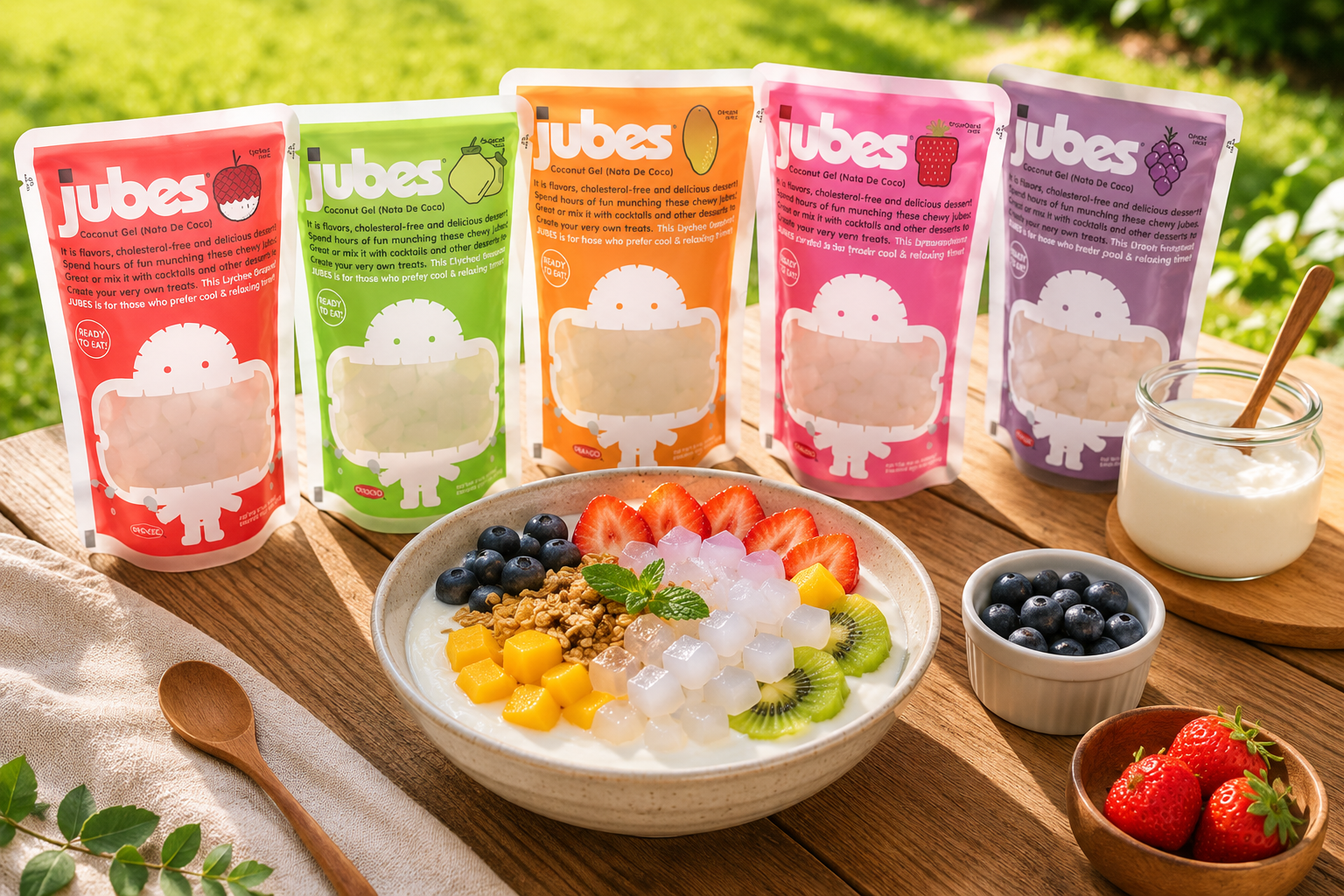
So, what are Jubes, exactly? Jubes are a modern, ready-to-eat take on traditional coconut jelly cubes, designed for the American market and built on 75 years of Filipino fermentation wisdom. Each cube is made from fermented coconut water, certified Halal, HACCP-certified, and produced under a Quality Management System meeting SNI ISO 9001:2015 standards. They contain dietary fiber, are cholesterol-free, fat-free, and made without artificial colors. They are the kind of snack that makes you feel good about reaching for them.
Jubes Flavors: From Lychee Coconut Jelly to Mango and Beyond
Jubes come in five irresistible flavors designed to suit every craving. Lychee coconut jelly delivers a floral, sweet-tangy burst that feels almost tropical. Mango is bright and sunny. Strawberry is playful and fruity. Grape is refreshing with a light sweet-tangy finish. And the Original flavor lets the pure, clean taste of coconut cubes shine on its own. Every variety carries that signature bounce and that unmistakable chew that makes coconut gel cubes so addictive.
| Flavor | Price Per Unit | Pack of 6 |
|---|---|---|
| Original | $7.88 | $19.88 |
| Lychee | $7.88 | $19.88 |
| Mango | $7.88 | $19.88 |
| Grape | $7.88 | $19.88 |
| Strawberry | $7.88 | $19.88 |
Where to Buy Jubes in the US Today
Wondering where to buy Jubes? You have plenty of great options. Jubes are available on the Jubes USA website, Amazon, and TikTok Shop. You can also find coconut jelly cubes near me by visiting El Super locations and select Asian markets across the country. Whether you shop online or in person, getting your hands on a pouch of Jubes has never been easier.
How to Use Coconut Cubes in Your Everyday American Kitchen
Beyond Bubble Tea: Creative Ways to Use Juicy Cubes at Home
Jubes are wildly versatile once you start experimenting. Drop them into iced tea, sparkling water, or lemonade for instant fun. Layer them into yogurt parfaits, spoon them over shaved ice, or serve them alongside fresh fruit for a dessert that looks stunning and tastes even better. They work beautifully as a topping for smoothie bowls and make any simple drink feel like a treat from a specialty shop.
Pairing Jubes With a Sago Recipe or Lychee Coconut Jelly Dessert
Looking for inspiration? Try folding Jubes into a classic sago recipe, the Filipino pearl tapioca dessert served chilled with sweet coconut syrup. The combination of soft sago and chewy coconut cubes is a textural dream. Or build a lychee coconut jelly dessert bowl by combining Jubes Lychee flavor with coconut milk, crushed ice, and lychee fruit. It takes about five minutes and tastes like something from a high-end dessert café.
Why Millennials and Gen Z Are Obsessed With Coconut Gel Cubes
Millennials and Gen Z are drawn to food that is fun, photogenic, and carries a real story. Coconut gel cubes check every single one of those boxes. They are TikTok-ready, endlessly customizable, and rooted in a heritage that feels both exciting and authentic. In a food landscape full of processed novelties, Jubes offer something genuinely different. Every pouch connects you to a 75-year-old tradition born from brilliance in a Philippine laboratory.
Frequently Asked Questions
What is nata de coco and how did it originate in the Philippines in 1949?
Nata de coco is a chewy, translucent gel made by fermenting coconut water with specific cellulose-producing bacteria. It was discovered by Filipino food technologist Teódula Kalaw Africa in 1949 at the Bureau of Plant Industry in the Philippines. Africa found that fermenting coconut water created a thick, rubbery gel that could be cut into cubes, sweetened, and eaten as a dessert or topping. Her discovery turned agricultural waste into one of the most beloved ingredients in Asian food culture.
What are Jubes and how are they different from regular gummy candies or gelatin jelly?
Jubes are ready-to-eat coconut jelly cubes made from fermented coconut water. Unlike gummy candies, which are made with gelatin or starch and tend to be sticky and dense, Jubes have a unique springy, bouncy texture that is completely natural and distinct. Unlike gelatin jelly, which melts quickly, coconut jelly cubes hold their shape and deliver a satisfying chew. Jubes are also fat-free, cholesterol-free, high in fiber, and made without artificial colors, which sets them apart from most conventional candy products.
Can I use coconut jelly cubes in a sago recipe or other homemade desserts?
Absolutely. Jubes coconut cubes are incredibly versatile in the kitchen. They pair beautifully with a sago recipe, adding a chewy contrast to the soft tapioca pearls. You can also use them in lychee coconut jelly dessert bowls, smoothie toppings, iced drinks, fruit salads, and shaved ice creations. Because they come pre-sweetened and ready to eat, there is no prep required. Just open, scoop, and enjoy.
Where can I buy Jubes nata de coco jelly cubes in the US, including online and in stores?
Jubes are available for purchase through several convenient channels in the US. You can shop online at the Jubes USA website, on Amazon, and through TikTok Shop. If you prefer in-store shopping, look for Jubes at El Super grocery locations and select Asian markets near you. Searching for coconut jelly cubes near me will often surface local Asian grocery options that carry the brand.
Does Jubes offer bulk or wholesale purchasing options for retailers and food distributors looking to stock coconut gel cubes?
Yes. Jubes are available in bulk packs, including a pack of 24 units priced at $53.98, making them an accessible option for retailers, food service operators, and event buyers. Retailers and food buyers interested in carrying Jubes or exploring broader distribution options can also connect with Indonesian Food Distributor Jans Food USA, a trusted sourcing partner for Asian specialty food products. Whether you are a small shop or a regional chain, stocking Jubes gives your customers access to a product with a built-in fan base and a growing cultural moment behind it.